
Desktop vs Mobile Slots: Best Platform for Play

Playing slots online means choosing between your phone and your computer. Each option works differently and fits different types of players. Both platforms offer the same odds and payouts, but they differ in speed, screen size, control options, and how easy they are to use during long or short gaming sessions.
Mobile slots let players spin anywhere at any time. Desktop slots provide a larger screen and more detailed visuals. The choice affects how players track their progress, manage bonuses, and enjoy the overall experience. Some players prefer the quick convenience of mobile gaming. Others value the control and clarity that comes with a full-sized monitor and keyboard.
This guide breaks down the real differences between desktop and mobile slots. It covers what matters most for different playing styles, from bonus features to security. Players will learn which platform fits their needs based on session length, game type, and personal preferences.
Desktop vs Mobile Slots: Key Differences
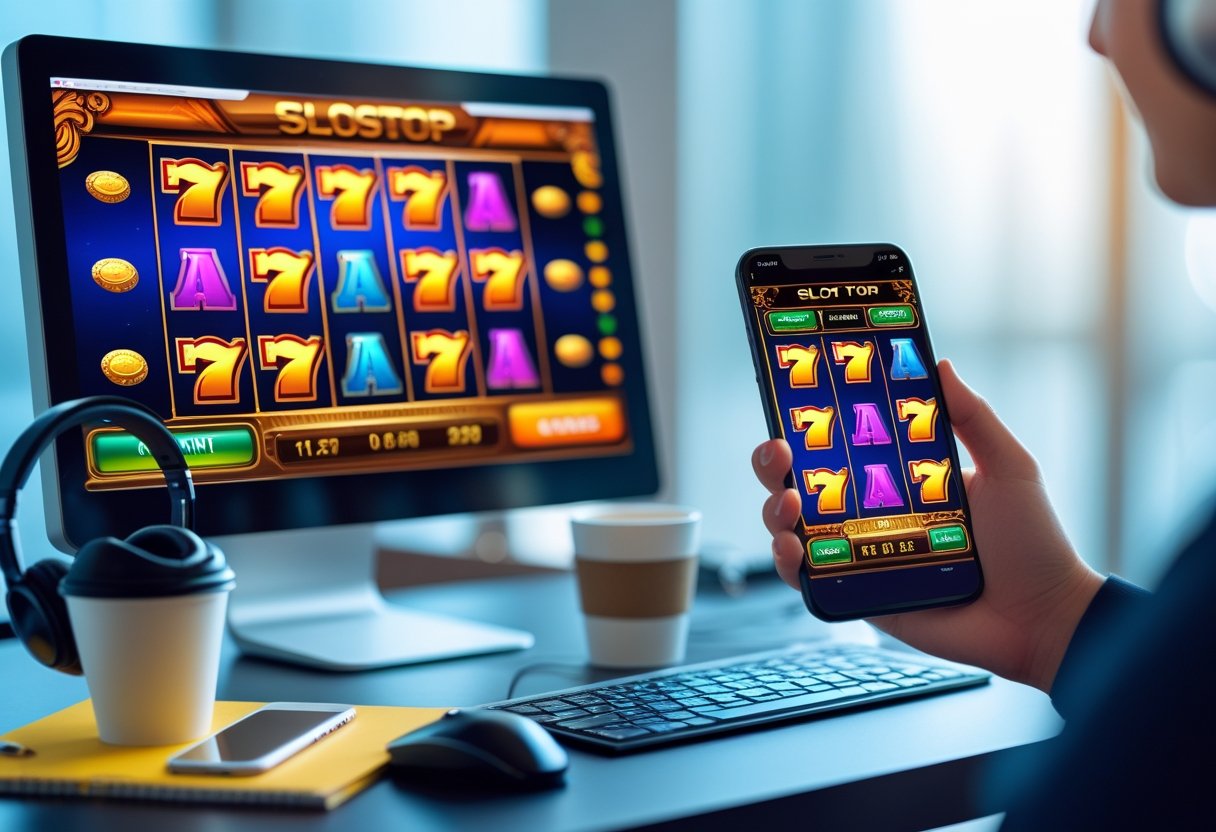
Desktop and mobile slots operate on different technical foundations, serve distinct player needs, and continue to reshape how people access online casinos. Both platforms offer unique advantages shaped by hardware capabilities and user behavior patterns.
Gambling Platform Technology
Desktop slots run on more powerful processors and graphics cards than most mobile devices. This hardware advantage allows desktop gaming to display complex animations, detailed bonus rounds, and multiple information panels simultaneously. Desktop casino platforms typically use landscape layouts that show pay tables, bet history, and jackpot meters alongside the main game screen.
Mobile slots rely on HTML5 technology to ensure compatibility across different smartphones and tablets. Developers optimize these games for varying screen sizes and processing capabilities. The vertical orientation common on phones requires simplified control panels and streamlined menus. Touch controls demand larger buttons with more spacing to prevent accidental taps during gameplay.
Internet connectivity differs between the two platforms. Desktop connections usually provide faster, more stable speeds for loading graphics-heavy slot games. Mobile devices must perform well even with fluctuating network signals, which pushes developers to create lighter file sizes and faster loading times.
User Preferences and Playstyles
Players choose mobile slots for quick sessions during commutes, breaks, or while waiting in line. The portability of smartphones and tablets makes it possible to play casino games anywhere without being tied to a specific location. Mobile gaming sessions tend to be shorter and more casual.
Desktop users typically engage in longer play sessions with more focus on detailed features. The larger screen size and precise mouse controls make it easier to explore complex bonus mechanics and strategy elements. Players at desktop computers often prefer immersive experiences with richer sound effects and visual details.
Cross-platform accounts let gamblers switch between devices based on their current situation. Someone might start a slot game on their desktop at home, then continue playing the same title on their phone later. This flexibility matches the varied gaming habits of modern online gambling participants.
Mobile vs Desktop Evolution
Mobile devices have narrowed the performance gap with desktop computers over recent years. Modern smartphones now handle advanced graphics and gameplay features that once required desktop hardware. The online gambling market has responded by investing heavily in mobile-optimized slot games.
Desktop slots maintain advantages in screen real estate and processing power for the most demanding games. Live dealer games and slots with intricate bonus stages still perform better on larger screens with stable connections. Online casinos continue supporting both platforms because different players value different features.
The line between mobile and desktop experiences keeps blurring as technology improves. Tablets occupy a middle ground, offering bigger screens than phones while maintaining portability. Both platforms now receive simultaneous game releases, and neither dominates the online slot games market completely.
Accessibility and Convenience
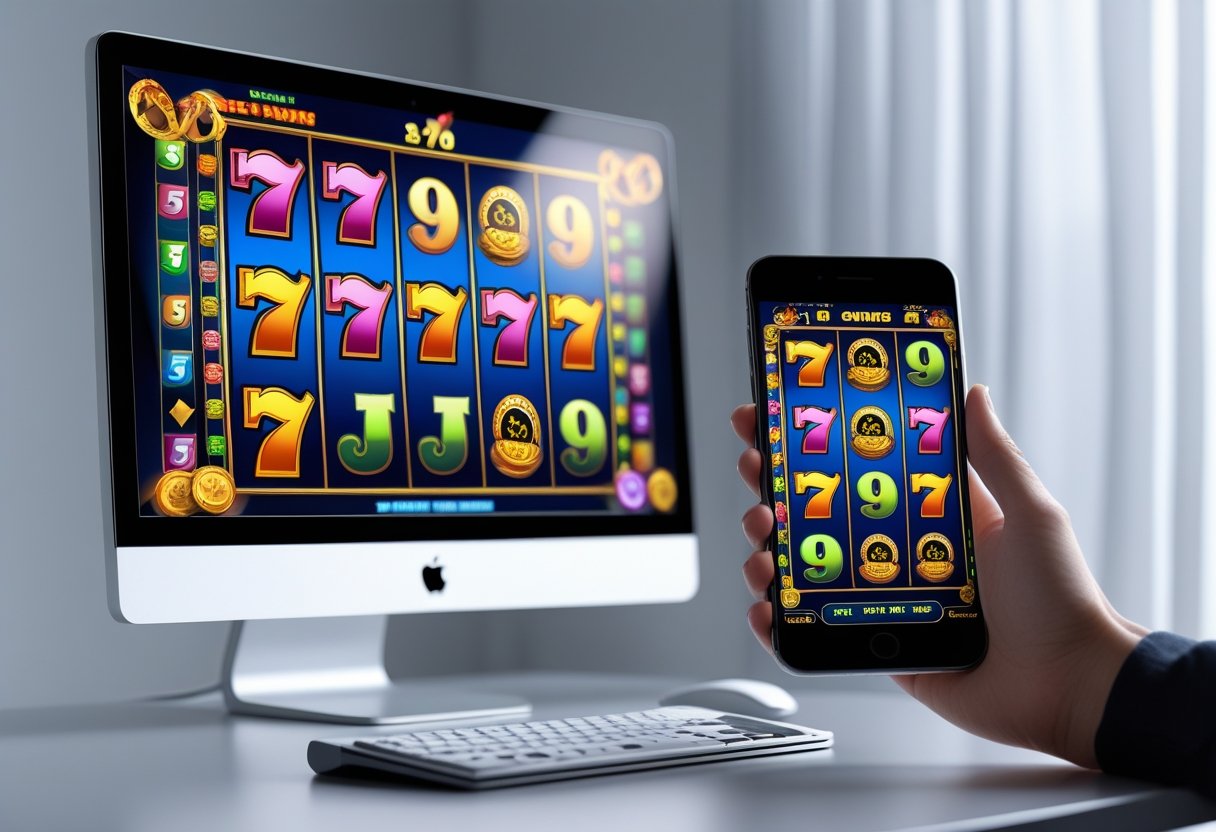
Mobile devices let players spin slots anywhere with an internet connection, while desktop platforms require players to stay at a fixed location. Each option offers distinct advantages based on when and where someone wants to play.
On-the-Go Gaming with Mobile Devices
Mobile slots give players the freedom to play from any location. Players can launch games during a commute, lunch break, or while waiting in line. The only requirement is a smartphone or tablet with Wi-Fi or cellular data.
Mobile platforms load games quickly on modern devices. Players can complete quick spins in short bursts of free time throughout the day. Push notifications alert players to new bonuses, free spins, or promotions without opening the casino app.
Key mobile advantages:
- Play from anywhere at any time
- No need to sit at a desk or specific location
- Fast session starts for 5-10 minute play periods
- Instant alerts for time-sensitive offers
The touch interface makes spinning reels simple with a single tap. Players can switch between apps or pause games instantly when needed.
Stationary Experience on Desktop Platforms
Desktop slots require players to sit at a computer with a stable internet connection. This setup limits where players can access games but creates a focused gaming environment. Players need to be at home or in an office to use desktop platforms.
Desktop gaming works best for longer play sessions. The larger screen stays in one position, which reduces eye strain during extended gameplay. Players can open multiple browser tabs to track bonuses or compare games side by side.
Desktop setup benefits:
- Dedicated gaming space with fewer distractions
- Stable Wi-Fi connection with consistent speeds
- Easier to manage multiple games or bonus tracking
- Better for sessions lasting 30 minutes or more
Desktop platforms give players full keyboard and mouse control. This precision helps when navigating game menus or adjusting bet sizes quickly.
Visual Experience and Gameplay
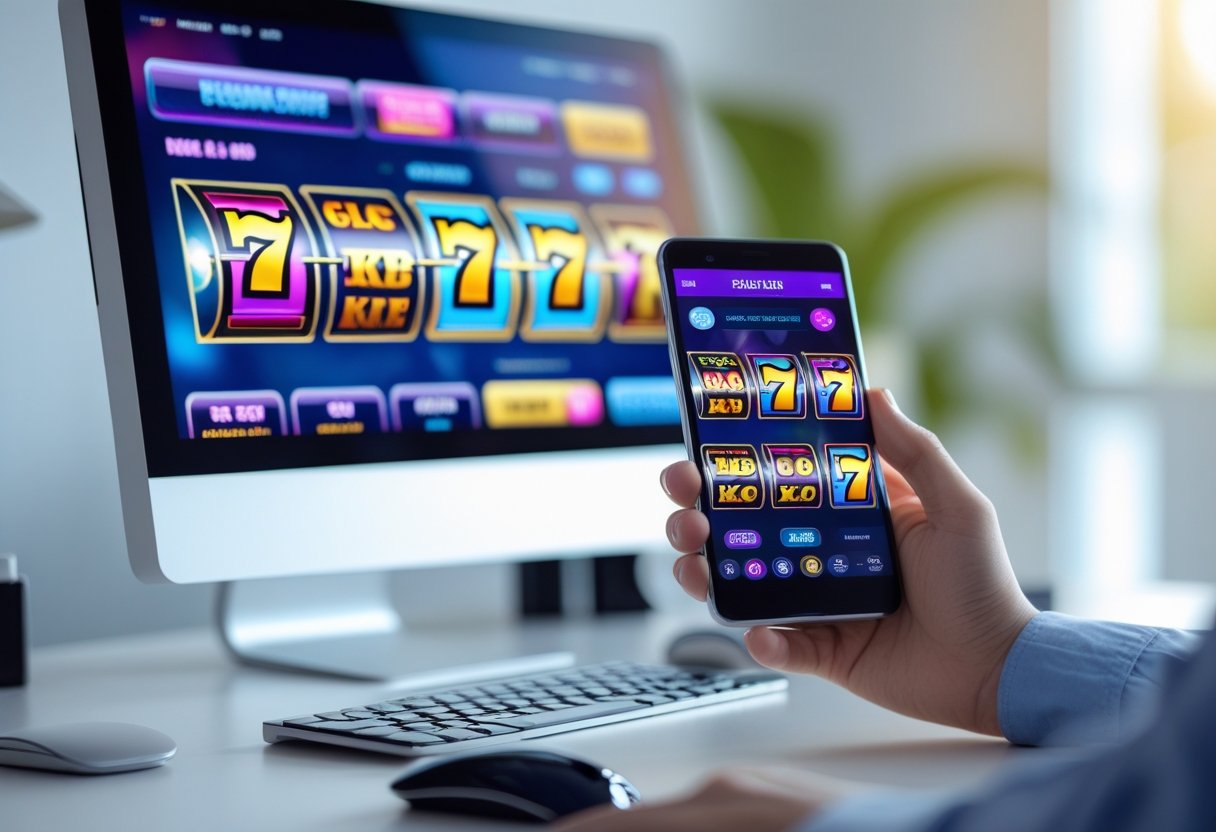
Desktop and mobile slots deliver different visual and control experiences based on their hardware. Screen size affects how much detail players can see, while control methods change how they interact with games.
Screen Size and Graphics Quality
Desktop monitors provide more screen space for slot games. Players can see all game elements at once, including pay tables, bet controls, and bonus features without scrolling or switching screens. The larger display shows sharper details in symbols and animations.
Mobile slots work on smaller screens, usually between 5 and 7 inches. Game developers adjust layouts to fit touch-screen controls and compact displays. Some complex visual effects get simplified to work better on phones and tablets. High-end smartphones can display quality graphics that come close to desktop versions, but older devices may show less detail.
Desktop gaming typically supports higher resolutions. A 24-inch monitor running at 1080p or 4K shows more visual depth than most mobile screens. This makes a bigger difference in modern slot games with detailed artwork and 3D animations.
Touch Controls vs Keyboard and Mouse
Touch-screen controls let players tap to spin reels and swipe through menus. Most mobile slots use large buttons designed for fingers. Players can start quick spins with a single tap. The interface feels natural for casual gaming sessions.
Desktop slots use keyboard and mouse controls. Players click buttons with a mouse pointer, which offers more precision for adjusting bet sizes and accessing settings. Some players prefer this method for longer gaming sessions since it requires less physical contact with the screen. Desktop controls also make it easier to open multiple windows or check game information while playing.
Performance and Loading Speed
Gaming experience depends on device power and internet connection. Desktop computers usually have stronger processors and better graphics cards than mobile devices. This means smoother animations and faster loading times for complex slot games.
Mobile slots are optimized to use less data and battery power. They load quickly on good connections but may struggle on older phones. Quick spins work well on both platforms, though desktops handle multiple animations running at once more easily. Performance gaps have narrowed as smartphones get more powerful.
Game Selection and Platform Compatibility
Desktop casinos typically offer larger game libraries than mobile versions, though this gap has narrowed significantly. Mobile platforms now support most popular titles, but some older slots and specialty games remain desktop-only due to technical limitations.
Exclusive Games and Features
Desktop platforms give players access to the complete casino game library without restrictions. Older slot games built before mobile optimization often work only on desktop computers. These games may include classic 3-reel slots and certain progressive jackpot titles that require specific screen dimensions.
Mobile slots have caught up in recent years. Most software providers now design games that work on both platforms from the start. However, mobile versions sometimes simplify complex features to fit smaller screens. Games with intricate bonus rounds or multiple simultaneous features may offer a reduced experience on phones.
Some casinos release mobile-exclusive slots to attract smartphone users. These games use touch controls and vertical screen orientation that wouldn’t work well on desktop. The selection remains smaller than desktop-only titles, but it’s growing each year.
Jackpot Slots Availability
Progressive jackpot slots appear on both platforms, but desktop gaming provides better access to the full range of jackpot games. Desktop casinos display larger jackpot networks and make it easier to track multiple progressive prizes at once. Players can open several jackpot slots in different browser tabs to monitor prize amounts.
Mobile apps include most major jackpot slots but may limit how many games load simultaneously. The smaller screen makes it harder to compare jackpot values across different titles quickly. Some jackpot slot games with network-wide progressives work identically on both platforms, ensuring mobile players don’t miss opportunities for big wins.
Bonuses, Promotions, and Loyalty Offers
Mobile and desktop platforms often feature different bonus structures that affect how players claim and use promotions. Casinos create platform-specific offers to encourage downloads and reward different play patterns, while welcome packages and ongoing deals may vary in size and requirements.
Mobile-Exclusive Free Spins and Rewards
Mobile apps typically offer exclusive promotions designed for quick, on-the-go play. These bonuses include free spins on mobile-optimized slots, time-limited reload offers, and push notification alerts for special deals. Many online casino operators provide smaller but more frequent rewards to match shorter mobile gaming sessions.
Players who enable app notifications gain instant access to limited-time promotions. Location-based bonuses sometimes appear when traveling to different states or regions. Mobile-exclusive offers often feature lower wagering requirements compared to desktop versions, making them easier to clear during brief play sessions.
Biometric login features allow faster access to time-sensitive deals. Some casinos reward consistent mobile use through special loyalty points or app-only tournaments. These mobile-specific incentives serve as tools for casinos to maintain active user bases on their applications.
Welcome Bonus Differences
Desktop platforms often display larger initial welcome packages with more detailed terms. The bigger screen makes it easier to review wagering requirements, eligible casino games, and expiration dates before claiming. Some operators reserve their most comprehensive first-deposit matches for desktop users.
Mobile welcome offers tend toward simpler structures with fewer steps in the claim process. The verification process may differ between platforms, with desktop sometimes requiring more detailed documentation. Both versions provide legitimate bonuses, but the amounts and conditions can vary significantly.
Key differences include:
- Desktop bonuses may reach higher dollar amounts
- Mobile versions often feature streamlined activation
- Wagering requirements can differ by 10-20% between platforms
- Game restrictions vary, with mobile having more limited selections
Players benefit from comparing both platform offers before making their first deposit.
Ongoing Promotions and Offers
Weekly and monthly promotions frequently differ based on the platform used to claim them. Desktop versions provide better tracking tools for monitoring wagering progress toward bonus clearance. The larger screen displays comprehensive promotion calendars and detailed terms that help players plan their gaming sessions.
Mobile platforms excel at delivering rapid-access daily deals and reload bonuses. These offers match the shorter, more frequent sessions common among mobile players. Time-restricted promotions work well on mobile because push notifications alert users immediately when new deals launch.
Loyalty programs may track points separately or together across platforms depending on the casino. Some operators offer bonus multipliers for switching between desktop and mobile play. Smart players check both versions before depositing to identify the best current promotion for their situation.
Reload bonuses on mobile typically feature faster processing times for smaller amounts. Desktop handles larger bonus transactions more efficiently and provides detailed bonus history tracking.
Security and Payment Methods
Both mobile and desktop slots use the same core security standards, but mobile platforms add extra protection layers through biometric logins and app store vetting. Payment options remain largely similar, though desktop platforms sometimes offer a few more banking choices.
Encryption and Data Protection
Licensed slot platforms use 256-bit SSL encryption on both mobile and desktop versions. This protects all data that travels between a player’s device and the casino’s servers. The encryption standard is the same one banks use for online transactions.
Mobile casino apps pass through Apple App Store or Google Play review processes before release. These reviews check for malware, spyware, and proper security measures. Desktop sites don’t go through this extra screening step, though reputable operators still maintain strong security.
Players should always verify a casino’s license information at the bottom of the site or in the app description. Licensed platforms must follow strict data protection rules set by gambling authorities. Both formats sync account information through secure cloud systems, so switching between mobile and desktop doesn’t create security gaps.
Biometric Authentication for Mobile
Mobile devices offer fingerprint scanning and face recognition for casino logins. These biometric options add security beyond traditional passwords. A stolen password can be used by anyone, but biometric data stays unique to the account owner.
Most casino apps now support Touch ID, Face ID, or Android equivalents. Players can enable two-factor authentication on top of biometric logins for additional protection. Desktop casinos require manual password entry each time, though some browsers save credentials.
The combination of biometrics and two-factor authentication makes mobile slots harder to access without authorization. Desktop players should use password managers and enable any available security features to match this protection level.
Banking and Payment Options
Desktop casinos typically support more payment methods than mobile apps. Players on desktop can access the full range of options including Visa, Mastercard, bank transfers, e-wallets, and cryptocurrency.
Mobile apps support most major payment methods but may limit certain bank transfer options or region-specific services. The core methods work identically across both platforms. Deposits and withdrawals process at the same speed regardless of device type.
Some casinos offer mobile-exclusive payment methods like Apple Pay or Google Pay. These work only on mobile devices and provide faster checkout than entering card details manually. Desktop users can save payment information in their browser, though this carries slightly higher security risks than app-based storage.
Comparing the Overall Gaming Experience
Desktop and mobile platforms shape how players interact with casino games in different ways. Session length and distraction levels vary significantly between the two, affecting focus and play style.
Multitasking and Session Length
Desktop gaming supports longer, more focused sessions. Players can keep multiple browser tabs open to track wagering requirements, compare bonus terms, or check game rules without switching apps. The larger screen makes it easier to monitor bonus progress bars and session statistics simultaneously.
Mobile gaming works better for shorter bursts of play. Most players use their phones for quick sessions during breaks or commutes. The touch interface allows fast navigation between games, but switching between the casino app and other tools disrupts the flow.
Battery life limits mobile sessions. Extended play drains phone batteries quickly, especially with graphics-heavy slots. Desktop setups avoid this constraint entirely.
Players who grind through wagering requirements or play multiple games at once get more control on desktop. The screen space and processing power handle complex tracking better than mobile devices.
Notifications and Distractions
Mobile gaming comes with constant interruptions. Push notifications from other apps, calls, and texts break concentration during spins. Casino apps also send their own alerts about bonuses and promotions, which can distract from gameplay.
Desktop gaming offers a quieter environment. Players face fewer interruptions unless they choose to check other programs. The dedicated gaming space helps maintain focus during longer sessions.
Push notifications do provide value for mobile players. Casinos alert users about time-sensitive bonuses, free spins, or exclusive mobile promotions. These alerts help players catch limited-time offers they might otherwise miss.
Players seeking uninterrupted focus should choose desktop. Those who want quick access to casino games between other activities will prefer mobile despite the distractions.
Frequently Asked Questions
Players often have specific questions about the technical and practical differences between desktop and mobile slot gaming. The platforms share the same core mechanics but differ in screen size, control methods, visual presentation, and how players interact with game features.
What are the main differences in user experience between desktop and mobile slots?
Desktop slots use mouse and keyboard controls, while mobile slots rely on touchscreen inputs like taps and swipes. The larger desktop screen provides more visual space to see paytables, bonus meters, and game information simultaneously. Mobile devices offer portability and faster loading times but compress the interface into a smaller display.
Players can track wagering requirements and bonus progress more easily on desktop because of the expanded screen real estate. Mobile platforms excel at quick, casual gaming sessions and provide push notifications for bonuses. Desktop setups work better for extended play periods and managing multiple game tabs.
How do the graphics and performance of slots games compare on desktop and mobile?
Both platforms run the same games with identical RTP percentages and payout mechanics. Desktop versions typically display fuller graphics with more detailed animations and background elements. Mobile slots use streamlined designs that prioritize smooth performance on smaller screens with touch-friendly buttons.
Load speeds often favor mobile devices for initial game launches. Desktop platforms may show slight delays at startup but maintain stability during longer sessions. Battery drain becomes a factor on mobile, with extended gameplay consuming significant power.
Modern mobile devices handle graphics well, but desktop monitors provide superior visual clarity for complex slot designs. Players who value immersive graphics and detailed visual elements will notice the difference on larger screens.
What are the advantages of playing slots on a mobile device versus a desktop?
Mobile slots offer convenience for players who want to spin during breaks, commutes, or away from home. The touch interface feels intuitive and allows for faster input compared to clicking. Mobile platforms load games quickly and work well for autoplay sessions.
Some casinos provide mobile-exclusive bonuses like no-wagering free spins to encourage app usage. Players can receive instant notifications about promotions and account activity. The portability means gaming fits into shorter time windows throughout the day.
Desktop gaming provides better multitasking capabilities for players who want to monitor multiple aspects of their session. Larger screens reduce eye strain during extended play. Players who grind bonuses or track detailed statistics prefer the expanded interface and easier access to game information.
Can players access the same features and bonuses in slots games on both desktop and mobile platforms?
The core game features remain identical across both platforms, including bonus rounds, free spins, and special symbols. Player accounts sync between devices, allowing seamless transitions from mobile to desktop without losing progress. A slot with 96% RTP performs the same mathematically regardless of platform.
Some casinos offer platform-specific promotions, with mobile-only bonuses becoming more common. Desktop players may find it easier to locate and claim certain promotions due to better menu visibility. All standard casino bonuses, loyalty programs, and VIP rewards apply equally across devices.
Game catalogs generally match between platforms, though some older titles may not have mobile-optimized versions. The wagering requirements and terms for bonuses stay consistent whether players claim them on mobile or desktop.
Are there any compatibility issues to be aware of when playing slots on different devices?
Modern casino platforms use HTML5 technology that works across devices without requiring separate apps. Some older Flash-based games may only run on desktop computers. Players should verify their mobile operating system meets the casino’s minimum requirements for optimal performance.
Browser compatibility affects both platforms, with Chrome, Safari, and Firefox offering the best support. Mobile players using public Wi-Fi face security risks and should consider VPN protection. Desktop users rarely encounter these same connectivity concerns on secure home networks.
Screen resolution differences mean some game elements may appear smaller or repositioned on mobile devices. Touch controls require slightly different button sizes compared to mouse-click targets. These design adjustments don’t affect gameplay but change how players interact with the interface.
How does the choice between desktop and mobile slots affect game variety and availability?
Major online casinos offer the same game libraries across both platforms. Popular titles from providers like Betsoft, Nucleus Gaming, and Pragmatic Play run on mobile and desktop. Progressive jackpot slots function identically on both platforms, with the same prize pools and trigger mechanics.
Desktop platforms may host a few legacy games that haven’t received mobile optimization. These represent a small fraction of total game catalogs at established casinos. New releases almost always launch with cross-platform compatibility from day one.
Mobile casinos prioritize their most popular slots for app versions, though browser-based mobile play typically provides full access. Desktop users can more easily browse large game collections due to better filtering and search tools. The actual variety available remains comparable when players use modern HTML5-compatible casinos.